What comes next
After the Output
A field journal for noticing what AI gives back after the conversation ends
You can see what AI helped you finish. The draft. The plan. The problem you worked through.
But what about everything that happened because of it?
Maybe you saved time, gained clarity, felt some relief, or finally moved forward. Maybe the experience gave you very little at all.
After the Output helps you notice and record what working with AI actually gives you.
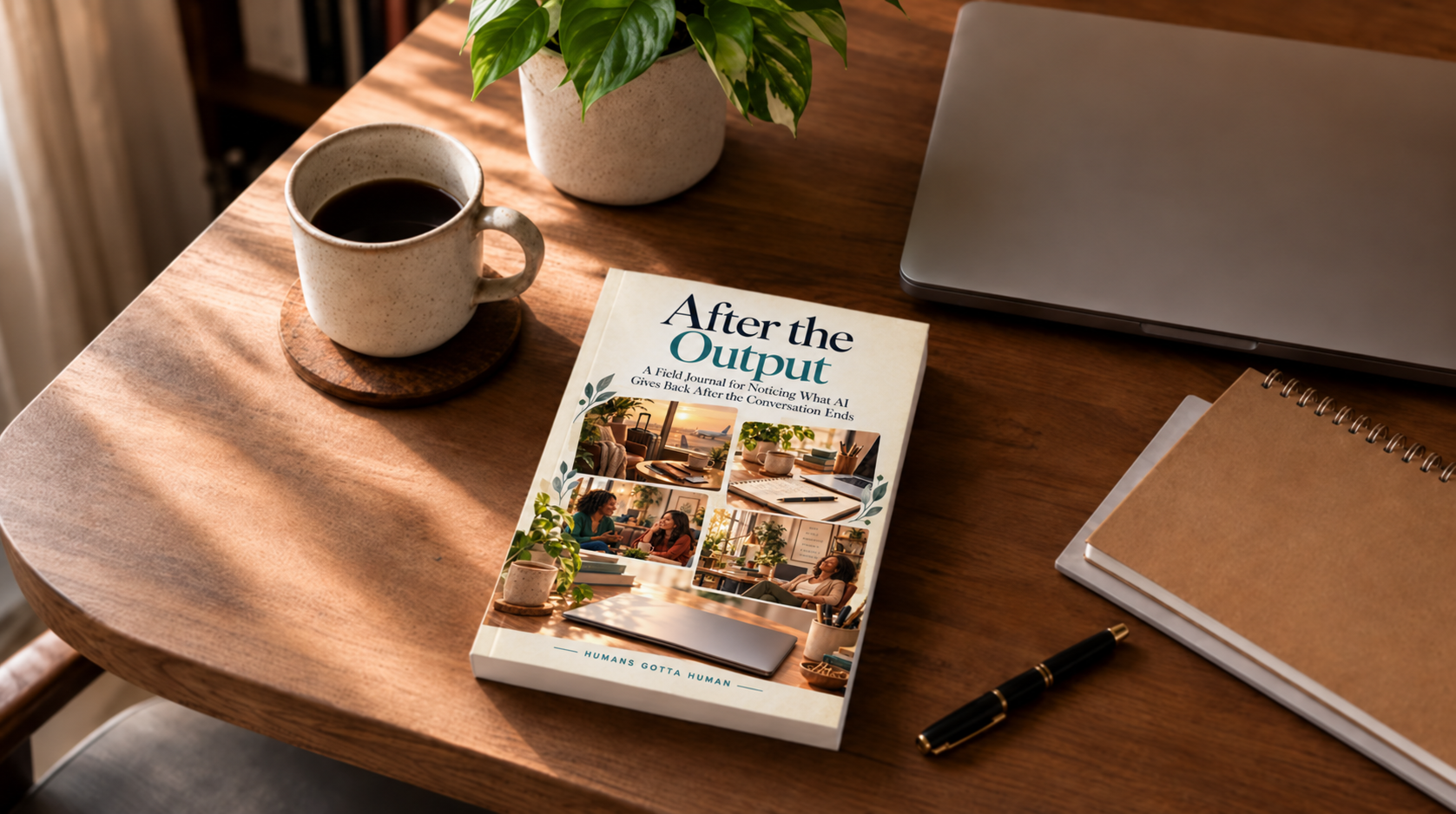
Printed paperback · 6 × 9 inches · Available now
Available Now on Amazon - $9.99 →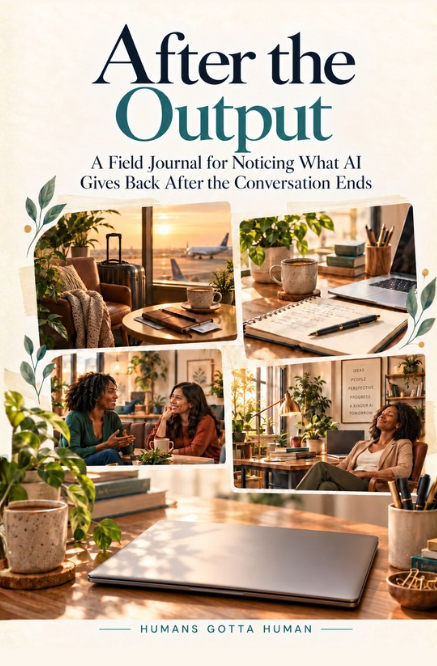
A small practice. A clearer record.
When you finish working with AI, take a moment to notice what happened and write it down.
Short entries capture the experience. Occasional look-backs help you see patterns.
Over time, you'll build a record of what AI is actually adding to your life.
This is not another productivity tracker.
No streaks to maintain. No minutes to count. No productivity scores.
This isn't about getting more done. It's about understanding what working with AI gives you.
Time. Clarity. Confidence. Relief. Or maybe very little at all.
Because the value of AI isn't just what it helps you produce. It's also what it makes possible.
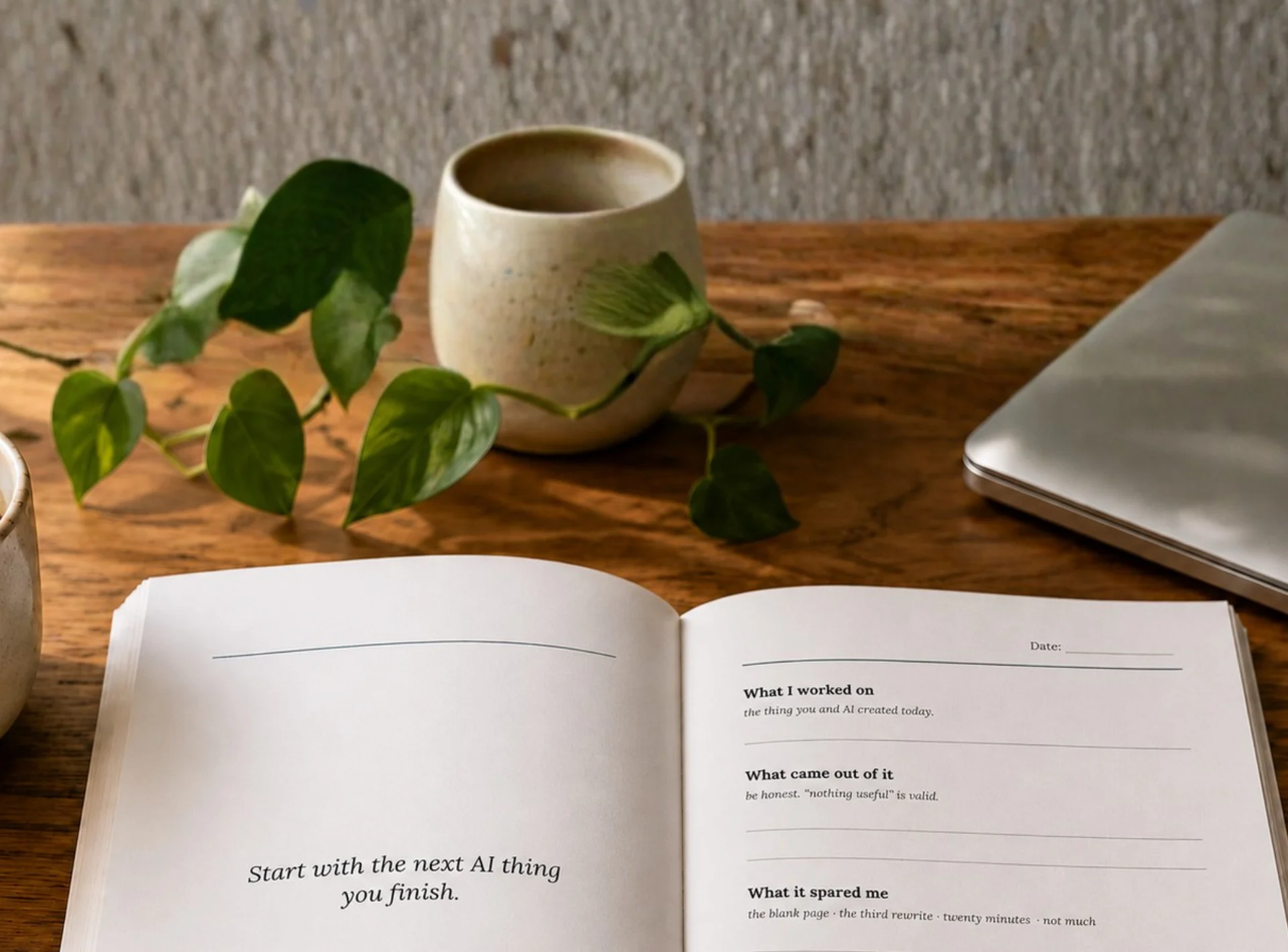
Not every entry has to be a win.
Some AI experiences are helpful. Others are frustrating or create more work than they save. Both belong here.
You're not keeping a highlight reel. You're building an honest record of your AI experience.
This may be for you if…
You already use AI regularly, but you want a clearer sense of what it's adding to your life beyond completed tasks. You may recognize yourself here:
- 01You regularly use AI to write, plan, research, or solve everyday problems.
- 02You know AI helps, but want to better understand what you're gaining from it.
- 03You want an honest picture of what working with AI adds to your life, not just how much you get done.
You don't need a specific role, industry, or level of technical skill. You only need experience working with AI, and curiosity about what that experience is actually giving you.
Frequently Asked Questions
No. The journal is not tied to one platform. You can use it with ChatGPT, Claude, Gemini, Copilot, or any other AI tool that helps you create, think, plan, or solve.
That belongs here too. The journal is not designed to prove that every AI session was worthwhile. Capturing what fell short, created more work, or changed very little has value here too.
No. There is no daily schedule. You make an entry when you finish something with AI and want to capture what came from the experience. The practice is brief, flexible, and built around how you already use AI.
You could. But most of what AI gives you doesn't arrive with an announcement. You finish the task, close the window, and move on. By the end of the week, the details blur together. You remember that AI helped, but not how. You remember that something felt easier, but not what changed because of it. This journal gives those moments somewhere to land before they disappear. Noticing shouldn't depend on remembering to notice.
You don't have to be. This isn't about writing pages of reflection, documenting your day, or digging through every emotion the experience brought up. Instead, it's a brief field record for something you already do. The flow is simple. Finish something. Pause. Write enough to remember what happened. Then keep going.
A fair question. A blank notebook gives you space. This gives that space a shape: guided prompts for noticing something valuable but easy to miss, and a practice that adds up over time. The value isn't in the pages you fill or having someone else tell you whether AI is worth using. It's in building the evidence for yourself, in your handwriting, from your experience, in words you chose. By the end, you won't have a theory about what AI gives you. You'll have your truth.
There's more to working with AI than getting things done.
This field journal invites you to look beyond the finished work and notice what the experience gave you.
Because recognizing the value matters, too.
After the Output · Printed paperback · 6 × 9 · Available now